Driving safely for longer
As you get older, things change. Be aware of how health and fitness can affect your driving.
Driving safely matters, whatever age you are
Just like you get your car MOT, it’s important for mature drivers to have a driver MOT. As we age, deteriorating eyesight, slower reaction times and medications can affect driving. You may find you start to avoid driving at night, use the car less, drive shorter distances along quieter routes, and generally avoid motorway driving where possible.
It is important to make sure that, whenever you get in the car, you are still able to drive safely. There are many steps you can take to keep driving safely for as long as you can.
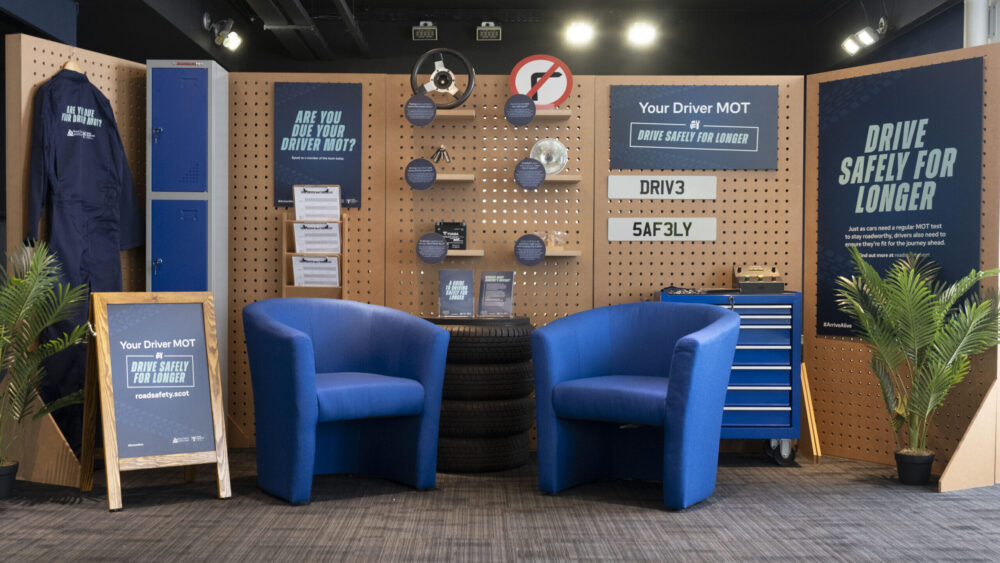
Fitness to Drive – National Roadshow
Throughout 2026, we will visit towns and cities across Scotland, talking to mature drivers about the changes to look out for as we get older and the steps that can be taken to keep driving safely for longer. Our friendly fitness to drive team will be on hand to chat to drivers about their experiences and to provide tips and advice on steps that can be taken to remain safe behind the wheel. There will also be opportunities to find out more information about Mature Driving Reviews on the day and to sign up if you would like to try one.

Icon Grid
-
Health matters
-
Know the law
-
Refresh skills
-
Plan ahead
Steps to keep driving safely for longer
Your health & habits
Vision, hearing, and medication
Book in for an eye exam
Remember you do not have to wait until you are due for your next eye examination if you notice changes in your vision. Find out more about NHS eye examinations.
Use hearing aids
If you usually wear a hearing aid at home, use it when driving too. Any kind of sensory loss can lead to feeling confused and disconnected from your surroundings.
Understand the effects of medication
Some prescription drugs and over-the-counter medicines can also have an impact on your driving but it’s often difficult to predict when and how they’ll affect you. Here are some things to keep in mind:
- Always read the labels, and ask your doctor/pharmacist for advice
- As medication is often used to suppress symptoms, it is important to consider the effect on driving ability when you stop taking any medication
- Driving while impaired due to the use of prescription drugs is against the law and subject to exactly the same penalties as driving under the influence of illegal drugs. This can include a fine of up to £5,000, loss of licence and potentially prison
Drive safely, planning, and awareness
Plan before you go
Plan your journey before heading out, especially when driving long distances on unfamiliar routes and allow time for breaks. A Sat-Nav can be useful: set it up in advance and never adjust it while driving. You may also want to have a fully charged mobile phone in case of emergencies and tell someone where you are going, when you expect to arrive and confirm your arrival.
Keep an eye on speed
As we get older, our reaction times change. So make sure you have time and space to react when driving and leave plenty of room between you and the car in front. Good anticipation is critical.
Avoid distractions
It’s helpful to avoid distractions, especially when negotiating busy junctions. It is illegal to use a hand-held mobile phone while driving, but even using a hands-free phone can distract attention from the road and traffic ahead.
Reduce night driving
As we get older, our eyesight changes. At age 65 it can take four times longer for your eyes to recover from glare.
Mobility and driving support
Make mobility modifications
If you are experiencing problems such as difficulty in gripping the steering wheel or with other car controls, the Scottish Driving Assessment Service can give advice. They can provide a full fitness to drive assessment. This is a free NHS service which is open to everyone in Scotland via a referral from your GP, for more information visit the Scottish Driving Assessment Service. DriveAbility Scotland can also help with mobility modifications and vehicle adaptions.
Parking concessions may also be available to disabled drivers and passengers under the Blue Badge scheme. For further information visit www.gov.uk/apply-blue-badge.
Speak to friends and family about any driving concerns
If you are feeling less confident behind the wheel, there are many steps you can take including speaking to friends and family about how you are feeling and get their support in helping you to reduce/stop driving.
Choosing when to stop driving
If your reactions are becoming slower and you feel anxious when driving, it may be time to talk to someone about stopping. Speaking to your friends and family can help you find a way forward.
Saving on running and repair costs, and the extra income from selling a car can be a real bonus. Calculate possible savings at: https://www.olderdrivers.org.uk/retire-from-driving.
Getting out and about on foot or cycling can be invigorating, improve mental health and reduce stress. This is when a National Entitlement Card, more commonly known as a bus pass, comes in handy with the added bonus of contributing towards a cleaner, greener Scotland.
Changes in vision can affect the way you drive
As you get older, your eyesight undergoes changes which can impact your ability to drive safely. This can be an issue, especially when driving at night or in changeable light conditions.
There are things you can do to continue driving safely:
- Some people are eligible for help towards the cost of glasses or contact lenses in the form of NHS optical vouchers
- You must be able to read a number plate at a distance of 20 metres away – roughly five car lengths
- If you need to wear glasses, then do so while driving, otherwise it’s an offence (which could invalidate your insurance)
- If you’re stopped for a check and you fail an eye test, your licence can be revoked immediately
Is a change in vision affecting your driving?
If you notice changes in your vision, you don’t have to wait for your next eye examination, visit your local optometrist (opticians) for help and advice.
Road responsibilities
Refresh skills and stay confident
Refresh your driving skills
A mature driving assessment is a relaxed 30-60 minute session with an expert, driving your own car, on roads you are familiar with. At the end of the session you will be given guidance on how to continue driving safely for longer. You can do this through organisations such as IAM RoadSmart or the Royal Society for the Prevention of Accidents (RoSPA).
Refresh your knowledge of The Highway Code
The Highway Code has had some major changes in 2022. Keep up to date with the latest changes.
Driving within the law
It is up to you to self-declare your fitness to drive. It is also your responsibility to tell the Driver and Vehicle Licensing Agency (DVLA) if you develop a ‘notifiable’ medical condition or disability, or you have a condition or disability that’s become worse.
Notifiable conditions include anything that could affect your ability to drive safely, such as:
- diabetes or taking insulin
- syncope (fainting)
- heart conditions
- sleep apnoea
- epilepsy
- strokes
- glaucoma
You could be fined up to £1,000 if you do not tell the DVLA about a condition that might affect your ability to drive safely. You could also be prosecuted in the event of a collision, even if it is not your fault.
The rules and advice on what you must do will depend on the exact nature of your condition. It is essential to seek and follow advice from a medical professional, and to comply with any decision the DVLA makes about your driving licence.
Make your life easier
If you’re thinking of changing your car, there are a few things that can make driving easier:
- Change to an automatic
- Use technology like Autonomous Emergency Braking (AEB) to detect an accident and automatically brake, or Blind Spot Assistance, which warns you if someone’s in your blind spot
- Make use of reversing aids, like cameras or parking sensors
- Check for ISOFIX mountings – these are handy for child seats
Driving licence expiry
Your driving licence expires when you turn 70. If you want to keep driving, you need to renew it (and then do so every three years). Here’s how renewing your driving licence works:
-
The DVLA will give you the chance to renew as you approach your 70th birthday
-
It’s free and you can either do it by post, or online by using a unique ID code
-
You’ll need to complete a medical declaration of your fitness to drive
Hear from mature drivers and their families
Worried about someone's driving?
If you’ve noticed changes in a loved one’s driving, you’re not alone – and you don’t have to stay silent. Find out how to spot the signs, start the conversation, and help them drive safely for longer.

More road user advice
Vehicle safety
Limits and laws
Related content
Useful links